The call always comes after the fact. “It was working fine last week. Now I can’t get the house below 82.”
Nine times out of ten, a heat wave just rolled through, and the AC that had been coasting through mild spring temperatures suddenly had to run for 14 hours straight. That’s when the small stuff stops being small.
Most of the systems that fail during extreme heat weren’t broken before it hit. They were just quietly declining, and nobody noticed until the house felt like a greenhouse.
Why AC Systems Struggle When Temperatures Spike
Air conditioners spend most of the year on cruise control. Spring barely taxes them. Fall asks almost nothing. Then summer arrives, and a serious heat wave turns a manageable situation into a real problem fast.
The physics of it are simple: the bigger the gap between your indoor target temperature and the outdoor air, the harder the system has to work. During a heat wave, that gap gets enormous. A unit that could keep up at 90°F starts falling behind at 102°F, especially if anything is limiting its efficiency.
Dirty condenser coils. Restricted airflow. Low refrigerant. Weak capacitors. Any one of these can cause minor issues on a normal day. Stack them together during a prolonged Heat Wave, and you’ve got a system that’s effectively trying to run a marathon with its shoes tied together.
The Outdoor Unit Gets Ignored Until It’s Too Late
Most homeowners check the thermostat constantly. Very few walk outside and look at the condenser.
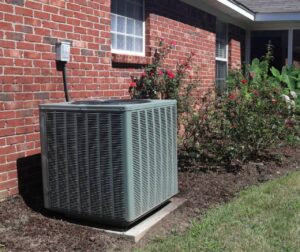
That metal box sits in full sun, collects dust and cottonwood, and has hot air blowing around it all day. During a heat wave, the ambient temperature around the unit can push well above the actual air temperature, especially if it’s sitting in a spot that traps heat.
Blocked airflow makes all of that worse. Condensers need open space to reject heat. Tall grass growing up around the unit, patio furniture pushed too close, storage bins stacked nearby, any of these reduce airflow and force the system to work harder than it needs to.
Two feet of clearance on all sides isn’t a lot to ask. During an extended heat wave, it can be the difference between a system that keeps up and one that gives out.
What a Clogged Filter Actually Does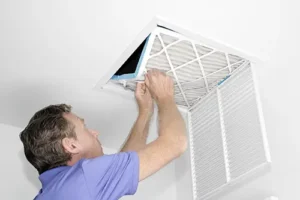
Everyone’s heard “change your filter.” Fewer people understand why it matters during extreme heat.
Air conditioners move a serious volume of air. When the filter is packed with dust, airflow drops, and when airflow drops, the evaporator coil gets too cold and can freeze solid. So instead of warm air being cooled and circulated, you get warm air blowing out of the vents because ice is blocking everything.
It reads like a broken compressor. It’s often a $12 filter.
This is also the kind of problem that might not show up during mild weather, but becomes obvious the moment a heat wave hits and the system runs continuously for days on end.
The Signs Worth Paying Attention To
Most AC systems don’t fail without warning. They give signals.
The house cools slower than it used to. Airflow from vents feels weaker. The outdoor unit sounds different, a hum that’s gotten louder, or a new rattle. Energy bills creep up without any obvious explanation. One side of the house stays noticeably warmer.
None of these individually mean disaster. But two or three of them together, heading into summer, is a system telling you it’s not ready for what’s coming. A heat wave will answer every question you’ve been putting off.
Why Timing Your Maintenance Matters
The best time to address AC problems is before they become problems.
Standard inspections before summer include checking refrigerant levels, cleaning the coils, testing electrical components, and confirming airflow. It takes a couple of hours and surfaces the kind of small issues that turn into emergency calls during a heat wave. A worn capacitor is a $50 part until the system dies at 9 PM on a 104-degree Saturday. Then the math changes considerably.
There’s no magic to it. A good technician looks at the system when it’s not under stress, finds what’s quietly failing, and fixes it before summer puts everything to the test.
How Long the Heat Lasts Is the Real Variable
A single hot day is manageable. Most systems can handle that, even with some minor inefficiencies.
The problem with a true heat wave is duration. Three days of triple digits is hard on equipment. Two weeks is genuinely punishing. Compressors overheat. Capacitors pop. Drain lines back up from the constant condensation.
Setting the thermostat to 68 during extreme heat doesn’t help it just makes the system run longer without getting there faster. Most HVAC technicians suggest 75–78°F as a reasonable target during a Heat Wave. It keeps the system cycling at a manageable pace instead of running flat-out without a break.
FAQ
Why does my AC run nonstop during a Heat Wave?
Because the gap between indoor and outdoor temperatures is so large, the system can’t keep up. Running continuously is normal under extreme conditions, the question is whether the house is still cooling down, even gradually. If it’s not making progress at all, something else is limiting the system.
Can extreme heat actually damage an air conditioner?
Yes. Prolonged high temperatures accelerate wear on compressors, capacitors, and fan motors, especially when those components are already showing signs of age. A heat wave doesn’t break a healthy system, but it tends to finish off one that was already marginal.
What should I check before summer hits?
Filter, condenser clearance, and any airflow that feels weaker than it used to. For anything beyond that, refrigerant, electrical components, and coil condition a professional inspection is worth the hour.
Is it worth shading the outdoor unit to protect it from the sun?
Airflow matters more than temperature. A shade structure that restricts airflow around the condenser does more harm than good. If you want to shade it, use something elevated that doesn’t interfere with how air moves around the unit.
How often should the system be serviced?
Once a year is enough for most homes. Spring is the right time before the first serious heat wave of the season, not during it.
The systems that reliably survive Texas summers aren’t necessarily newer or more expensive. They’re the ones someone bothered to check before the heat arrived.
Clean filters, clear airflow, occasional inspections, it’s not too complicated. It’s just attention paid before the forecast starts showing those numbers that everyone around here recognizes immediately.