What is the best SEER rating for Plano Texas?
If you’ve lived in Plano for more than one summer, you already know… the AC isn’t just a luxury—it’s survival gear. And if you’re shopping for a new unit or just curious about how efficient yours is, you’ve probably run into a SEER rating. Sounds technical, right? It is, but it’s also one of the simplest ways to figure out whether your AC is efficient enough for our scorching humid summers (and yes, the not-so-forgiving utility bills).
First, What Exactly Is a SEER Rating?
Let’s keep it plain, SEER stands for Seasonal Energy Efficiency Ratio. It’s the miles-per-gallon rating for your AC system. A higher number means more cooling for less electricity. A lower number means you’re paying more than you should to keep your house comfortable.
Now, here’s the catch. The “ideal” SEER rating isn’t just some universal number—location matters. A lot. And in Plano, TX, where you’ve got long stretches of 95°F days with the occasional “are you kidding me?” 105°F spike, your AC is working overtime.
Why SEER Matters More in Plano Than in Cooler Places
Do you know how your car’s gas mileage looks amazing on a slow cruise, but it tanks when you’re stuck in Dallas rush hour? Same thing with AC units. The more your system has to run, the more efficiency matters. And here in Plano, you’re not running your AC for a “few weeks of summer.” You’re running it for months, sometimes into October if the heat decides to overstay its welcome.
With a high SEER rating, that extended runtime costs you less. With a low one, well, you might as well start writing love letters to your electric company.
The “Sweet Spot” SEER Rating for Plano Homes
Alright, let’s skip the vague “higher is better” talk and get to numbers. In my experience (and I’ve seen my share of HVAC installs around here), the sweet spot for Plano is somewhere between 16 and 18 SEER for most homeowners. That’s high enough to make a noticeable difference on your bills and comfort, but not so high that the system’s upfront cost makes your jaw drop.
Sure, you can go for 20+ SEER systems—they’re amazing—but here’s the thing: Plano’s utility rates and climate mean you’ll save more over time with a 16-18 SEER system without taking decades to “break even” on your investment.
Quick Example
One of my neighbors upgraded from a 13 SEER dinosaur to a 17 SEER unit last summer. His electric bill dropped by about $75 a month during peak heat. Multiply that over four or five brutal months, and you start to see why this number matters.
When a Higher SEER Rating Might Be Worth It
Now, if you’re someone who keeps their thermostat at 70°F (even when it’s 103°F outside), you might want to lean higher—say, 18 to 20 SEER. Same goes if your home is big, has high ceilings, or gets blasted by afternoon sun. Those factors make your AC work harder, so extra efficiency pays off faster.
On the flip side, if you keep your thermostat modest, your home’s shaded, and you’re fine with 75°F indoors, you might not see the same payoff from the extra expense.
The Government Minimum Isn’t Enough for Plano
Federal regulations set a minimum SEER rating for new systems (as of 2023, it’s 15 for our region). And while that’s better than the 13 SEER minimum from years ago, it’s still not what I’d call “Plano-proof.” Yes, it’ll work. Yes, it’s technically efficient. But you’ll be missing out on significant long-term savings, especially when those triple-digit days hit one after another like they usually do.
Other Factors That Affect Real-World Efficiency
Here’s the thing—SEER is important, but it’s not the only factor.
You could have a 20 SEER system and still feel like you’re burning money if:
- Your ductwork leaks air (surprisingly common in older Plano homes).
- Your insulation is lacking (attic heat is no joke here).
- The system’s not sized right—too big or too small both cause issues.
I once visited a home with a top-tier SEER rating system that still struggled to cool because half the ducts were dumping air into the attic. Talk about frustrating.
Maintenance: The Unsung Hero of SEER Performance
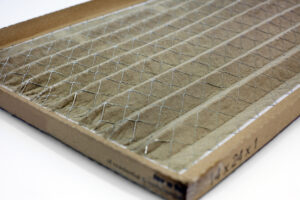
Dirty home air conditioner filter. Horizontal.
Even the best system can lose efficiency if it’s neglected. Dirty coils, clogged filters, and low refrigerant levels can quietly drop your SEER rating performance in real-world use. That’s why I’m a big believer in annual tune-ups—think of it as an oil change for your AC.
And no, I’m not saying this just because I’m in the industry. I’ve seen $10 filters save people from $800 repair bills more than once.
The Bottom Line on SEER Ratings in Plano
If you’re in Plano, aim for that 16–18 SEER rating range as your baseline target. It’s a sweet spot where efficiency, cost, and comfort balance out nicely for our long cooling season. Go higher if you run your AC hard or your home’s tough to cool. But whatever you do, don’t just settle for the minimum—your summer electric bills will thank you later.
Also, remember: a great SEER number on paper means nothing without proper installation and maintenance. The unit, the install quality, and your home’s overall efficiency all work together. So, next time you hear someone ask, “What’s a good SEER rating for Plano, TX?” you can smile and say, “Well… it depends, but I’ve got a pretty good idea.”