
Musty Odors From a Clogged Dryer Vent
Yeah. It absolutely can.
I’ve been in enough laundry rooms to tell you—when someone says “it just smells weird in here” or “everything feels damp,” I’m checking the dryer vent first. Nine times out of ten, that’s your problem.
Most people don’t even think about it until clothes stop drying. But the humidity and smell? Those show up way earlier.
What’s Actually Happening When the Vent Gets Blocked
Your dryer is basically trying to blast hot, wet air out of your house. That’s the whole job. It pulls moisture from your clothes and shoves it outside through that vent line.
When that line gets clogged, all that moist air has nowhere to go.
So it backs up. Leaks around the dryer door. Pushes through loose connections. Sometimes just sits in the duct and turns into condensation.
Either way, you’ve now got moisture dumping into your house instead of letting it escape.
I’ve seen laundry room windows fog up like a bathroom mirror after a shower. The homeowner swears nothing changed—same routine, same detergent. But the clogged dryer vent has been slowly getting worse, and now the room feels like a swamp.
Why the Musty Smell Always Shows Up
Here’s the thing: musty smells mean moisture is sitting where it shouldn’t.
A clogged dryer vent creates this warm, damp tunnel packed with lint. And lint? Perfect little sponge. It grabs every bit of humidity and holds onto it.
That’s when you start getting that mildew smell in the laundry room. Your clean towels smell like old towels. Sometimes the odor creeps into the hallway or even the kitchen if your airflow is bad enough.
One customer told me it smelled like her house was “tired.” I knew exactly what she meant.
The smell doesn’t scream “dryer problem” right away. But once you’ve dealt with enough clogged dryer vent situations, you can almost smell it before you even look.
Your Dryer Might Still Seem Fine (That’s the Trap)
This is what fools people.
The dryer still runs. Still heats up. Timer still works. Everything looks normal.
But drying takes forever. Clothes come out hot and damp. You’re running two or three cycles for one load.
And the whole time, humidity is building because that wet air isn’t escaping properly.
I’ve had people call me thinking their AC is broken or they need a dehumidifier. Nope. The clogged dryer vent has been the issue the whole time, just sitting there behind the machine like a lint-filled time bomb.
What’s Happening Inside That Duct
The lint buildup doesn’t just block air. It changes the temperature in the pipe.
Hot, wet air hits a cooler section—especially if your vent runs through an attic or garage—and boom, condensation. Now you’ve got damp lint paste stuck to the inside walls of the duct.
That’s when it gets gross. Over time, the inside of that vent starts to smell like… honestly, like a wet hamster cage. Not technical, but accurate. And that smell doesn’t stay trapped. Every time the dryer runs, it drifts back into your house.
Signs You’re Dealing With a Clogged Dryer Vent
The laundry room feels like a sauna
One load shouldn’t turn the room into a steam bath.
Clothes take multiple cycles to dry
If you’re running the dryer two or three times per load, something’s wrong.
The outside vent barely blows air
Go outside while the dryer’s running. Weak airflow or a flap that barely moves? That’s restriction.
You smell dampness near the dryer
That wet basement smell has no business in a laundry room.
The dryer shuts off early
Some models trip safety sensors when they overheat from a clogged dryer vent.
If you’ve got two or more of these, I’d bet money on it.
Why This Actually Matters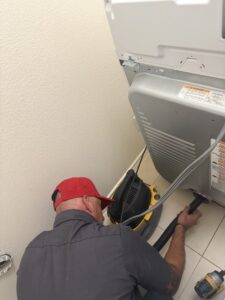
Look—humidity and odor are annoying. But the real problem? Fire risk.
Lint is basically kindling. Add heat and bad airflow, and things can go sideways fast.
I’ve pulled lint from vents in chunks. Like bread loaves. Gray, disgusting bread loaves.
A clogged dryer vent stresses your machine, raises humidity, creates odors, and increases the chance of overheating. That’s a bad combination. And it’s completely preventable.
How to Actually Fix It
You don’t need to overthink this.
Clean the lint screen every single load. Check the outside vent hood every few months. Get the full line cleaned regularly—especially if it’s long or has bends.
And if you’ve got crushed flex duct back there, replace it with rigid metal. Just do it.
Don’t ignore the warning signs. If drying time starts creeping up, that’s your alarm bell. A clogged dryer vent doesn’t fix itself. It only gets worse.
FAQ: Clogged Dryer Vent Problems
Can a clogged dryer vent actually raise humidity in my house?
Yes. The trapped moisture has to go somewhere, and if it can’t get outside, it leaks back into your home—especially around the laundry room.
Why do my clean clothes smell musty after drying?
Because the moisture isn’t escaping. With a clogged dryer vent, damp air lingers and leaves everything smelling like mildew.
Can a clogged dryer vent cause mold?
It can definitely contribute. Extra moisture in the air can create condensation in walls, ceilings, or nearby materials.
How do I check if my vent is clogged?
Run the dryer and go outside. If the airflow is weak or the flap barely moves, you’ve probably got a clogged dryer vent.
Is this dangerous or just annoying?
Dangerous. A clogged dryer vent increases fire risk. Musty smells are just the early warning.
Don’t Ignore the Smell
If your laundry room smells off or your house feels more humid than usual, don’t just light a candle and move on. Check the vent. Check the airflow. Check the outside hood. Because a clogged dryer vent looks like a small problem—right up until it’s not.