How High-Efficiency Air Filters Affect Airflow
You changed the filter three weeks ago. Since then the upstairs bedrooms won’t hold 74, the system runs a lot longer than it used to, and you’re waiting for something expensive to break. Nothing’s broken. You probably just dropped a high-efficiency filter into a return your blower can’t pull air through. It’s one of the most common calls I get in August, and the fix usually costs nothing.
What a Denser Filter Actually Does
A high-efficiency filter catches smaller particles because the media is packed tighter. That’s the whole trick. More material means more resistance, and your blower fights through it on every cycle.
Pleating helps. A pleated one-inch filter has several times the surface area of a flat fiberglass panel, which spreads that resistance out. But a one-inch slot only holds so much pleat.
Four- and five-inch media cabinets have room for deep pleats, and those carry high-efficiency media without much of a penalty. That’s the part homeowners miss. Two filters with identical MERV ratings can behave completely differently depending on how much depth they’ve got to work with. I’ve measured static pressure on a system where going from a one-inch MERV 13 to a four-inch MERV 13 cut resistance close to half. Same filtration. Very different airflow.
MERV Ratings and What Your Equipment Can Take
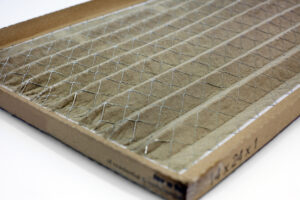
A lot of the Plano homes I work in went up during the boom years, and plenty of them came with one undersized return in a hallway ceiling. Those systems have no margin. Put a MERV 13 into a return that was marginal on day one and you’ll feel it at the supply vents inside a week.
MERV 8 through 11 covers what most families here need. If somebody in the house has asthma or a real allergy problem, MERV 13 is worth going after just go after it with a bigger filter cabinet instead of cramming high-efficiency media into a one-inch slot.
Fair caveat: if you’ve got variable-speed equipment and ductwork that was sized right, you may not notice any difference at all. Newer builds out toward Legacy usually have that headroom built in.
The Dirty Filter Problem
Here’s what actually wrecks airflow in North Texas: nobody changes the filter. We run these systems something like nine months a year, and between construction dust and the pollen that shows up every March, a one-inch filter loads up fast. Thirty to sixty days is realistic. The ninety days printed on the box was written for a milder climate than ours.
A loaded standard filter restricts more than a clean high-efficiency filter ever will. I pulled one out of a house off Custer Road last summer that had gone in sometime the previous fall. The coil above it was iced solid and the homeowner was sure she needed a compressor. New filter, thawed the coil, out the door in about ninety minutes.
Hold it up to a light. If light doesn’t come through, neither does air.
When the Filter Isn’t What’s Wrong
Weak vents, long cycles, a frozen coil in July those all point at airflow, but the filter is only one suspect. A collapsed flex duct in a 140-degree attic does the same thing. So does an evaporator coil nobody has cleaned in six years.
I’ve watched homeowners cycle through three different filters chasing a problem that turned out to be a duct boot that had come loose overhead. Swapping filters is a reasonable first move, and it’s the only part of this I’d tell you to handle on your own. Past that you need static pressure readings, which means gauges and drilled test ports.
Worth knowing: if the diagnosis turns into equipment replacement, Plano requires a mechanical permit and inspection for that work.
Get the Numbers Before You Buy Another Filter
Waiting on this gets expensive. A blower straining against too much resistance through a full Plano summer doesn’t fail politely it takes the motor with it. Let Total Air and Heat measure what your system can actually move first. Our only way is all the way, and that starts with real numbers instead of a guess at the hardware store.
Frequently Asked Questions
Can a high-efficiency filter actually hurt my AC?
The filter won’t hurt anything by itself. A blower straining against it for months will. Motors run hot, coils freeze up, capacitors quit early. The filter isn’t the problem the mismatch between the filter and the system is.
How often do I really have to change these things?
Every thirty to sixty days for a one-inch filter around here. Our cooling season runs long and the spring pollen load is heavy. Four-inch media filters stretch closer to six months, which is part of why I push people toward them.
Is MERV 13 overkill for a normal house?
For most families, yes. MERV 8 to 11 handles ordinary household dust and pollen without choking anything. When there’s asthma or a serious allergy in the house, that’s when a high-efficiency filter at 13 earns its keep in a deep cabinet, not a one-inch slot.
Filter’s brand new and the airflow still stinks. Now what?
Then it’s downstream of the filter. A dirty evaporator coil will do it. So will crushed flex duct baking in the attic. A diagnostic with static pressure readings sorts out which one in under an hour.
What happens if I just run it with no filter?
The coil gets coated and the blower wheel loads up with dust, and cleaning both of those costs far more than a few years of filters. Run something, even an inexpensive one. Just don’t run nothing.
Change it, then watch it for a week. If the vents don’t come back, call us before the coil ices over again.