You can hear the system. Fan’s going, thermostat’s lit, everything looks normal. But walk into the living room, and it’s still 80 degrees in there.
This is one of the most common calls in the trade and also one of the most frustrating for homeowners, because nothing looks wrong. The AC is clearly doing something. Just not cooling like it’s supposed to.
Here’s what’s actually going on.
Start With the Most Basic Question
Stand in front of a supply vent. Put your hand up. Is the air genuinely cold, or just kind of moving?
That answer splits this into two different problems. If the air’s cold but the temperature won’t drop, you’ve got a distribution issue. If it barely has any bite to it, the system itself isn’t producing effective cooling.
Low Refrigerant
If the refrigerant is low, usually from a slow leak, the system loses its ability to pull heat out of the air. It’ll still run. It’ll still blow air. But that air won’t be cold, and the house won’t respond.
Homeowners usually react by dropping the thermostat. The system just runs longer and longer, and the cooling never really arrives.
Dirty Evaporator Coil
The coil inside your air handler is out of sight, which means it’s usually out of mind. Dust accumulates on the fins over time, airflow drops, and heat transfer suffers. The system is technically operating, it’s just not doing much.
Airflow Problems Are Behind This More Than People Expect
Half the time it’s not a refrigerant issue or a failing component. It’s airflow. If air can’t move properly, the whole system underperforms regardless of how well the equipment itself is working.
The Filter
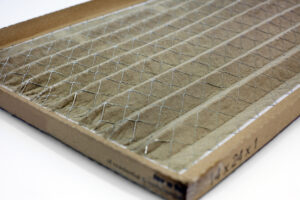
Yeah, I know. But pull the filter out and actually look at it. Filters that are completely packed with debris restrict airflow enough to tank performance. It’s the first thing to check, every time, without exception.
Closed or Blocked Vents
Walk the house. Are registers open? Is furniture sitting over floor vents? A couch pushed over a register can cut off an entire room, and the homeowner ends up convinced the system isn’t cooling that side of the house when really the air just never had a path to get there.
Blower Motor Problems
If the blower is weak or starting to fail, you won’t move enough air across the evaporator coil. Everything else can be working perfectly and you’ll still feel like the system is falling short.
Don’t Overlook the Outdoor Unit
That condenser unit sitting outside is doing real work. When it struggles, you feel it inside.
Coil Buildup
Grass clippings, cottonwood, leaves, and dust pile up fast on condenser coils. When the coil is coated, heat can’t release the way it needs to, and cooling capacity takes a direct hit.
I’ve cleaned condenser coils that were so packed with debris the unit looked insulated. The homeowner was convinced they needed a new system. After a good hose-down, it ran the way it should.
Fan Issues
If the condenser fan slows or stops, system pressures go out of range, and cooling drops off quickly. A bad capacitor is often the culprit, a relatively cheap fix if you catch it before it damages the motor.
Thermostat Settings (It Happens)
If the thermostat is set to “fan only” instead of “cool,” air circulates, but no actual cooling cycle runs. The house gets airflow and nothing else. It’s more common than you’d think, and it’s always worth verifying before anything else.
Beyond settings, a miscalibrated thermostat can read the indoor temperature lower than it actually is, which means it won’t call for enough cooling to keep the house comfortable.
A Frozen Coil Will Fool You
This one confuses people. You might feel cold air briefly, then notice it fade.
When the evaporator coil freezes over from low refrigerant, a dirty filter, or restricted airflow ice blocks the airflow entirely. The cooling drops off, sometimes to nothing. The system keeps running, the house stays warm, and there’s a block of ice forming inside your air handler.
Turning the system off and running just the fan will let it thaw. But if you don’t fix the underlying cause, it’ll freeze again.
Duct Leaks Are Quietly Costing You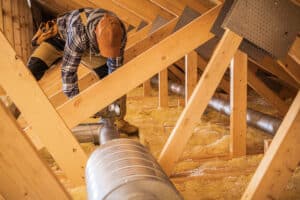
If your ductwork is leaking, cooled air bleeds out before it reaches the rooms. The system runs constantly. The house doesn’t respond. And the cause is invisible unless someone goes looking.
In attics especially, leaky ducts can dump conditioned air directly into insulation. The air handler is working hard, and the living space barely notices.
When It’s Just Really Hot Outside
This isn’t always what people want to hear, but sometimes the system is doing everything right and still struggling because it’s hot outside and the equipment was sized for a normal summer afternoon.
Systems genuinely hit their limits during heat spikes. Some lag is expected. But if the house never recovers, even after the sun goes down and outdoor temps drop, that’s a signal something needs attention.
FAQ
Why does my AC run all day without actually cooling the house down?
Usually airflow or refrigerant, the system is working, just not effectively. Start with the filter. If that’s fine, the next step is a tech with gauges.
Can a clogged filter really cause that big a difference?
It can. Restricted airflow throws off the whole system the coil can’t absorb heat properly, run times stretch out, and you end up with weak cooling that never quite catches up.
How do I know if the refrigerant is low?
Weak or warm airflow, longer run cycles, and sometimes ice forming on the lines outside or at the unit. It’s not something you top off yourself it requires a licensed tech, and there’s usually a leak that needs to be found first.
Should I shut the system off if it’s not keeping up?
If you suspect freezing or something clearly isn’t right, yes shut it down and let it sit. Running a compromised system for hours can make the underlying problem worse.
Why does my AC struggle more on the hottest days?
All cooling equipment has a design limit. On extreme days, it may run constantly and still not hit the target temperature. That’s not always a sign of failure but it’s worth noting whether it recovers at night. If it never does, something’s off.
If your system is running but cooling isn’t happening, start with the simple things first filter, vents, thermostat settings. Most of the time, there’s a traceable cause and the earlier you find it, the less likely it turns into something expensive. Systems don’t usually get better on their own. They just get louder about the problem.