
Ninety-eight outside, thermostat set to 74, and the house won’t come down past 81. The condenser’s running you can hear it through the window. Hold your hand over a vent, though, and it’s just moving air around. Second service call this summer. So now you’re standing in the hallway doing math about how much more you put into this thing. Some AC problems are a cheap part. Some aren’t.
When the Repairs Start Stacking Up
One repair means nothing. Capacitors die. Contactors burn up. I replace them all day long.
It’s the third call I pay attention to.
Had a customer over in Lake Highlands capacitor in May, contactor in July, then the next June her blower motor was pulling amps it had no business pulling. None of it was dramatic. But she’d put something like eleven hundred dollars into a condenser that was already fourteen years old, and she didn’t see it until she dug the invoices out of a kitchen drawer and added them up in front of me.
So keep your invoices. Not for the warranty. For the arithmetic. When I can see a run of AC problems written down with dates on them, I can tell you something useful. Without it I’m guessing right along with you.
How Old Is Too Old
Ten to fifteen years is what the manufacturers say. Around Dallas I’d shade that down a couple of years, and the reason is directly above your head. Most North Texas houses built from the seventies on put the air handler and all the ductwork up in the attic. I’ve had a thermometer up there in July reading 141. That’s where your coil and blower live for eight months a year the Dallas heat gets at that equipment from both sides.
Doesn’t mean a sixteen-year-old unit is scrap. I service a few older than that and they run fine, mostly because somebody stayed on top of them.
But age changes what a repair is worth, especially once AC problems start repeating. Twenty-three hundred dollars into a system with two summers left is not the same purchase as twenty-three hundred into one with eight, and neither of us knows for certain which one is sitting on your slab.
Compressor Trouble and Old Refrigerant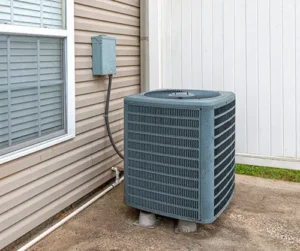
Two AC problems move this decision faster than anything else.
Compressor’s the first. Replacing one on an aging condenser runs into the thousands, and when you’re finished you’ve got a new part in a cabinet full of old ones. Out of warranty and past twelve years, I’d rather see that money go into AC replacement.
Refrigerant’s the second. Anything installed before roughly 2010 is likely R-22, and R-22 hasn’t been produced or imported here since 2020. What’s left is reclaimed and it costs what it costs. Refrigerant doesn’t burn off either low charge means there’s a hole. Add two pounds and you’ll get through July, then you’re back in the same spot by spring.
Now, an eight-year-old system with a weeping fitting on an accessible line set fix that. Not every leak is fatal.
High Bills and Rooms That Never Cool
Back bedroom sits at 79. Living room’s cold enough you want a blanket. Or the bill jumps eighty bucks and nothing about how you live changed.
I’ll argue with anybody who calls that a replacement conversation right off the bat. In Dallas, half the uneven cooling I find is duct joints that let go in the attic heat, or a return that was undersized the day the house got framed. Fixable, and cheaper.
The test is what happens after. Seal the ducts, clean the coil, put gauges on it and confirm the charge. If it still runs noon to nine and never reaches setpoint, the AC problems have moved past parts.
Get the Numbers Before It Picks the Date for You
Waiting until it quits is how people wind up on a wait list the second week of August. And a changeout in Dallas takes a mechanical permit pulled by a licensed contractor, so nobody’s handling it the same afternoon you call. At Total Air and Heat, We’re Not Comfortable Until You Are.
FAQ: AC Replacement Questions
How long do these things really last down here?
Ten to fifteen on paper, low end around here, because the air handler sits in a 140-degree attic all summer. Stay on maintenance and you can beat it most AC problems I see on older units trace back to years of skipped service.
Mine’s 13 and it still works. Replace now or wait?
Wait. If it cools and it hasn’t been nickel-and-diming you, leave it alone. Start pricing things when the repairs get routine or when it can’t hold setpoint on a 100-degree afternoon, so you’re buying on your terms and not in a panic.
is it ever worth just replacing the compressor?
Sometimes. Under eight years with warranty on the part, sure. Past twelve and out of warranty, you’re paying replacement money for one component while everything around it is exactly as old as it was yesterday.
Do I need a permit to swap out an AC in Dallas?
You do. Dallas requires a mechanical permit even on a like-for-like changeout, and your licensed contractor pulls it and schedules the inspection. Skip it and you can run into warranty trouble, and it has a way of surfacing again when you sell.
Why does it run all day and never cool the house off?
Airflow, nine times out of ten. Filter first, then ducts. Undercharge and a tired compressor come after that. Give a tech an hour with an amp clamp and a thermometer and he can tell you which AC problems you’re actually dealing with.
If it’s limping, call while it’s still limping. Nobody thinks clearly at four on a Saturday with the house at 90.